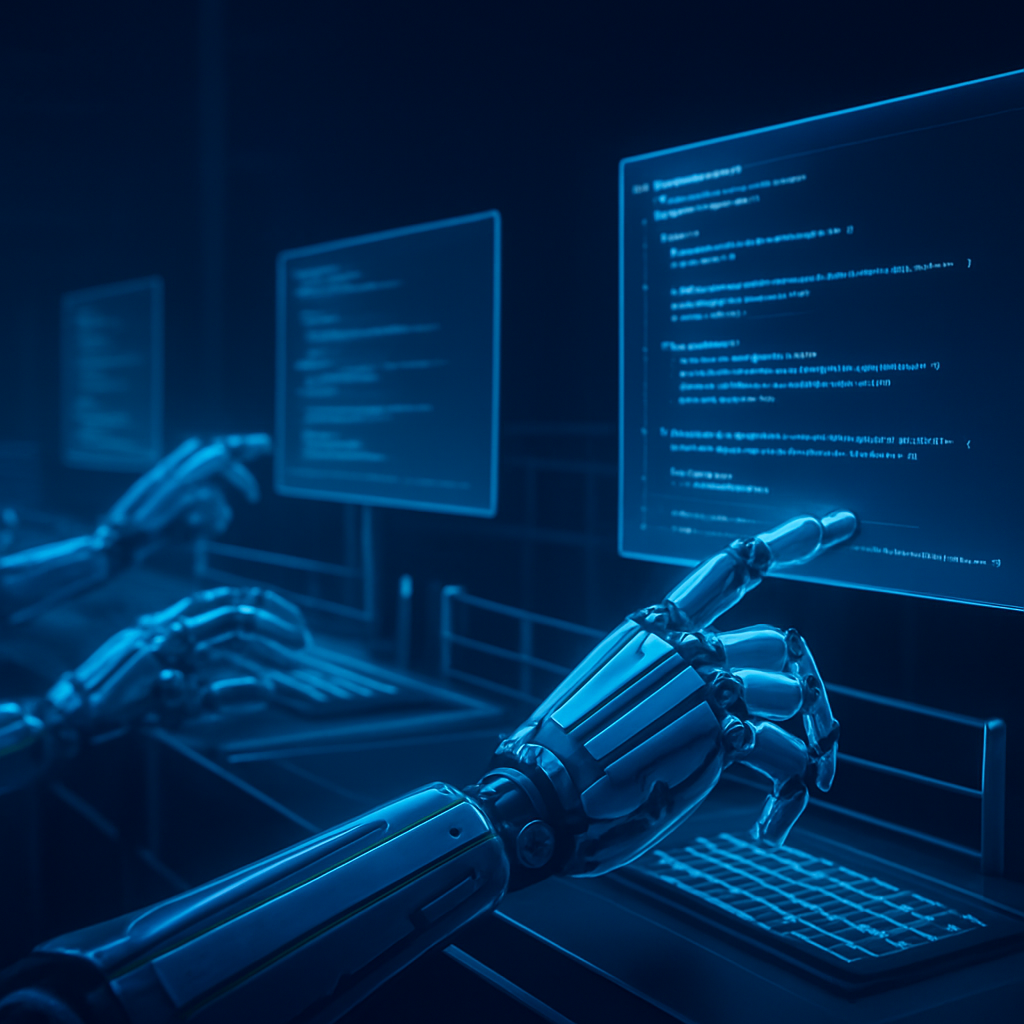
From Vibe Coding to Agentic Engineering: Why 2026 Is the Year AI Software Development Grows Up
Vibe coding got teams to demos faster than ever. It also increased production bug rates by 41% and created a new category of technical debt. Agentic engineering — structured, governed, spec-driven AI development — is replacing it. Here is the shift.
ElevoraX Engineering Team
Core Engineering
2024 was the year of vibe coding. Developers discovered that with the right prompts they could generate working prototypes in hours instead of days. GitHub Copilot, Cursor, and Claude became standard tools in every modern development workflow. Individual productivity metrics went through the roof. Then the production incident reports started arriving.
The Vibe Coding Reckoning
A landmark study published in Q4 2025 analysed 2,400 software teams that had adopted AI coding tools. The findings were uncomfortable: teams using AI coding tools with no governance framework saw a 41% increase in defects reaching production, a 35% increase in code review time, and a measurable increase in architectural inconsistency within codebases. The productivity gain at the individual level was real — but it was being consumed by the rework, review, and incident response that AI-generated code was causing at the team level.
What Vibe Coding Gets Wrong
Vibe coding optimises for the wrong metric: getting code written. Good software development optimises for getting the right code written, tested, documented, and maintained. An AI model that generates a working solution to the prompt you gave it has no knowledge of the ten non-obvious constraints that make that solution wrong for your specific codebase — the performance budget, the security requirement, the consistency with existing patterns, the maintainability concern.
Agentic Engineering: The 2026 Model
Agentic engineering is the discipline of using AI agents within a structured, governed development process that preserves the speed benefits of AI while eliminating the quality costs. It is not about using AI less — it is about using AI more intelligently.
Spec-First Development
In agentic engineering, AI agents begin with a specification, not a prompt. The specification describes the problem to be solved, the constraints the solution must satisfy, the interfaces it must conform to, the performance requirements, the security requirements, and the test criteria that will determine correctness. The agent operates within this specification as guardrails. This single change — requiring a spec before code generation — eliminates the majority of architectural inconsistency that vibe coding produces.
Automated Test Gates
Every AI-generated code change must pass automated test gates before human review. These gates include unit tests (the AI generates tests alongside code), integration tests against the actual service dependencies, security scanning (SAST + dependency vulnerability), and architectural conformance checks (does this code violate the established patterns for this service?). Code that fails a gate is returned to the agent for revision, not escalated to a human reviewer.
Human Oversight at the Right Levels
In agentic engineering, human engineers focus on the decisions that require human judgement: architecture decisions, specification writing, test criteria definition, and complex failure investigation. Routine implementation — CRUD endpoints, data transformations, test generation, documentation — is delegated to agents operating within the defined specification and test gates. This is not the removal of human engineers from the process; it is the elevation of human engineers to the decisions where they add the most value.
- Architect defines the system specification and architectural guardrails
- AI agent generates implementation code within the specification
- Automated test gates validate correctness, security, and conformance
- AI agent iterates on failures without human intervention
- Human engineer reviews the final implementation for specification accuracy and edge cases
- Automated deployment pipeline handles the release with AI-generated release notes
“92% of US developers now use AI tools daily. The competitive differentiator in 2026 is not whether you use AI — it is whether you have a governance framework that makes AI development reliable, auditable, and sustainable.”
Getting Started with Agentic Engineering
The transition from vibe coding to agentic engineering does not require new tools — it requires new discipline. Start by requiring a one-page spec document before any AI-assisted implementation. Define the test gates that every AI-generated change must pass. Assign architectural ownership so one person is responsible for the consistency of each service. These three changes, implemented consistently, will recover most of the quality that vibe coding eroded.